

The Jamaica Journal released its first issue in December 1967. Volume 1 opened with a message from Frank Hill, then chairman of the Institute of Jamaica, and a foreword by editor Alex Gradussov. In that foreword, Gradussov gave the Journal a dual purpose: it would be both a magnet and a directional device. This became the core of the publication’s mission.
As a “magnet,” the Journal set out to draw together Jamaica’s best cultural, historical and scientific minds and work.
As a “directional device,” it aimed to guide and shape the cultural and intellectual direction of the newly independent nation.
Its inclusive language made clear that the Journal was meant to be accessible to all Jamaicans, who were both its audience and those it sought to address.
As we approach the Journal’s 60th anniversary in 2027, how has it held to that purpose, and what can we learn from this first issue?
Jamaica Journal, Volume 1, Issue 1
Let’s take a closer look at Volume 1, No. 1 from December 1967. The issue is divided into three distinct sections:- History and the Institute: documenting the historical narratives of Jamaica and the wider region.
- Science for the Layman: demystifying natural history, biology and the local ecology.
- Art, Literature and Music: celebrating local music, visual arts and literature, and the artists who create them.
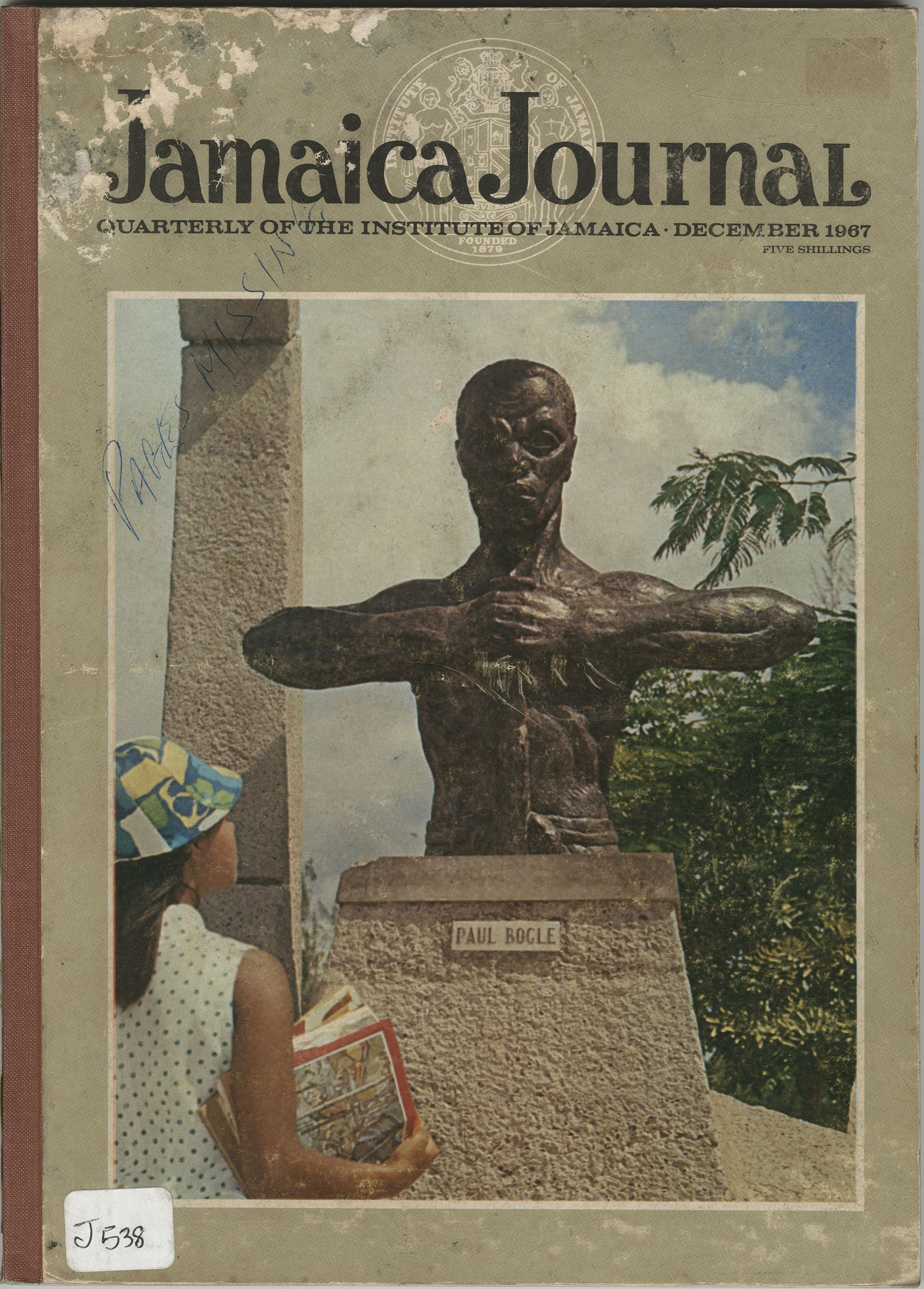
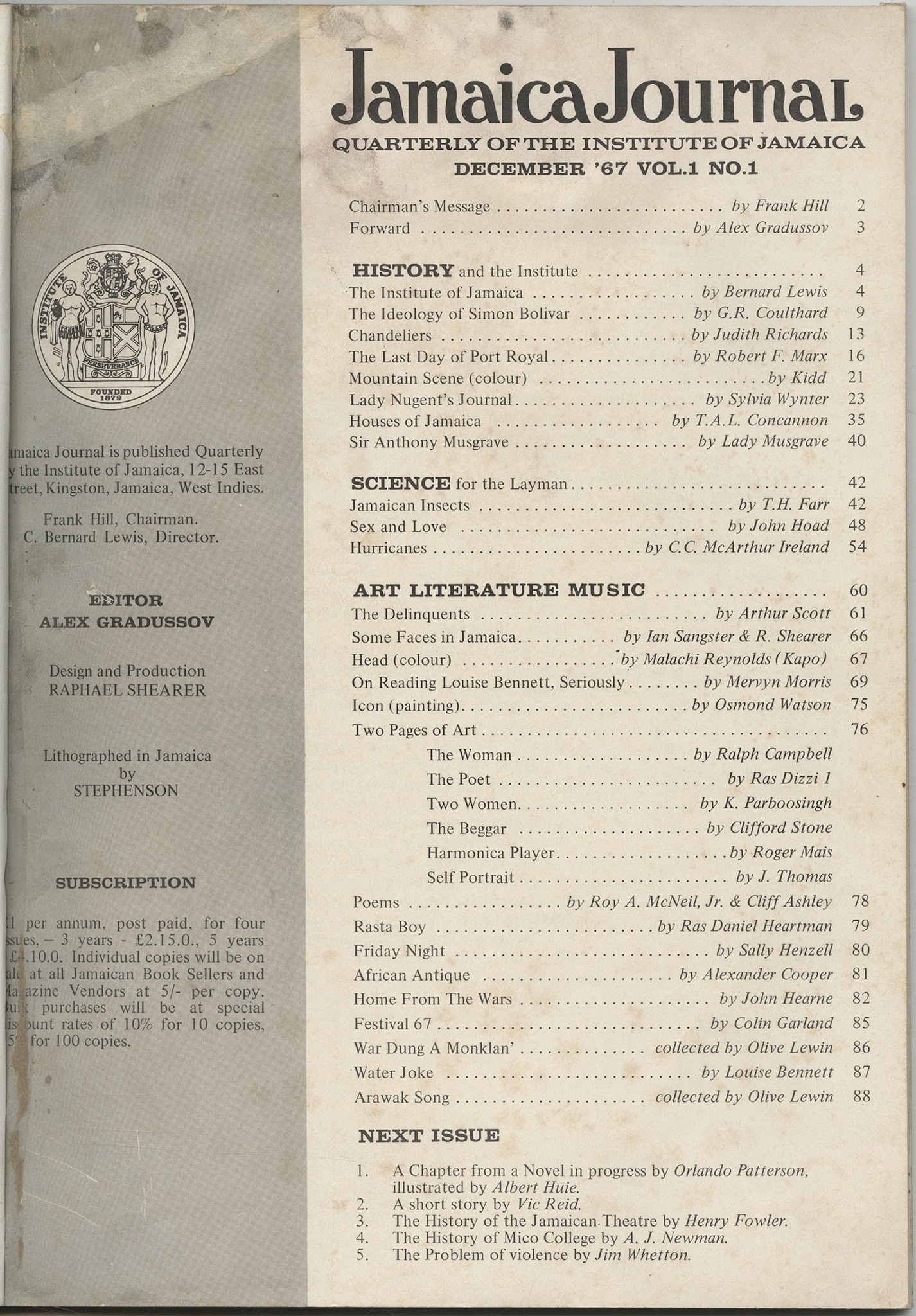
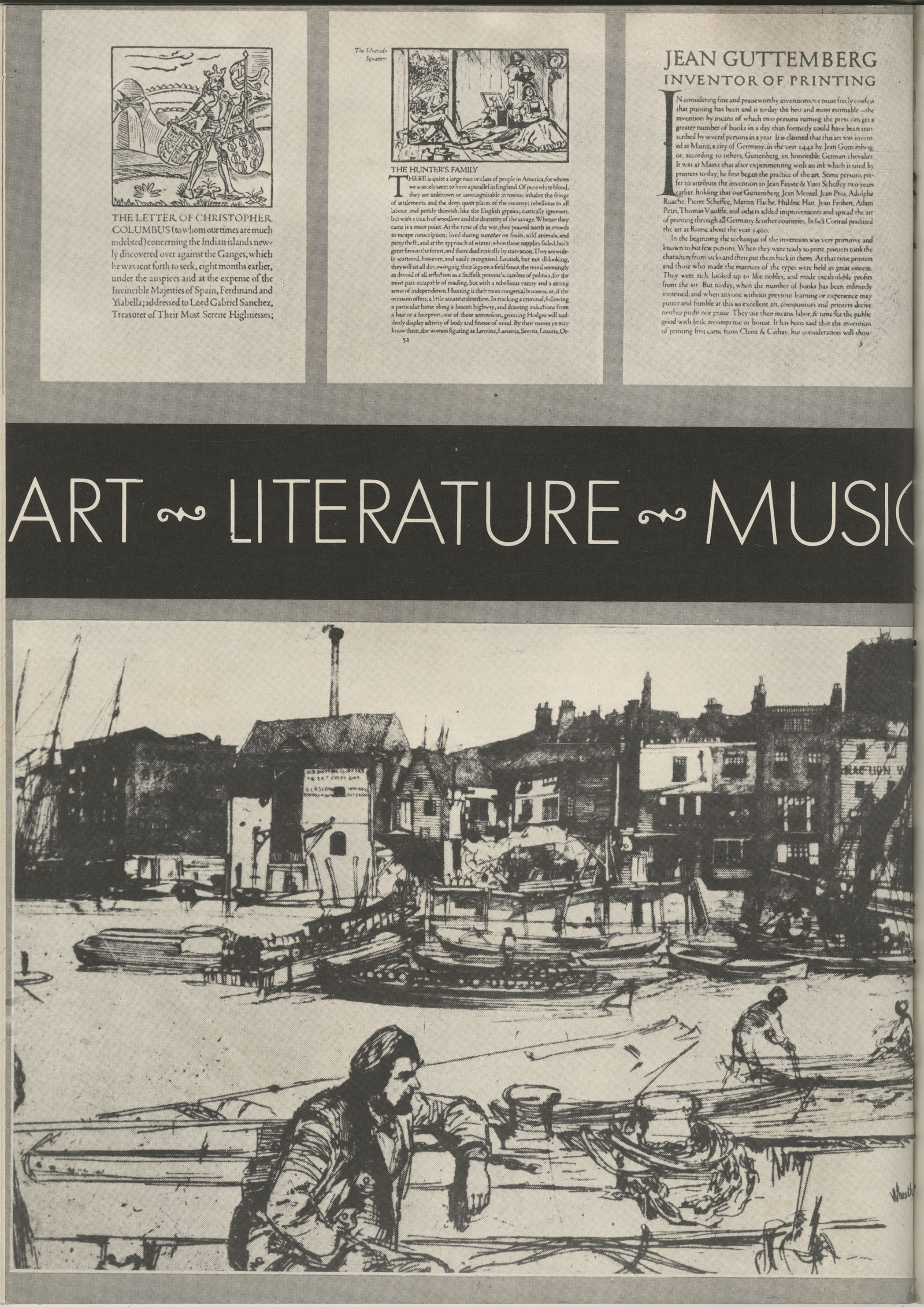
Source: Scanned images from the Jamaica Journal Volume 1, Issue 1 (cover, masthead, content pages, and the Art, Literature and Music pages), courtesy of the National Library of Jamaica.
Frank Hill’s Vision: How the Jamaica Journal Could Anchor an Emerging National Identity
Complementing Gradussov’s editorial framework was an important message from Frank Hill. Hill understood that for Jamaica to grow and develop, it needed a shared national consciousness. He envisioned the Journal as a bridge between specialised academic research and the curious general public. By publishing research in approachable, inclusive language, the Journal democratised knowledge. It invited every Jamaican to become a stakeholder, to engage actively with the country’s heritage, culture and history, and to see how these could shape civic life and participation. Hill encouraged us to be courageous, honest and curious.Welcome to the Jamaica Journal Blog: What to Expect
We will post every other Monday. Here is what we will cover:- Profiles of and interviews with researchers, artists and creators
- Excerpts from past issues on a diverse range of topics, from music and cultural touchpoints to moments in history and icons across industries
- Plain-language breakdowns of scientific discoveries in the Jamaican and Caribbean context
- Celebrations of Jamaican music, art, literature, history and science
- Behind-the-scenes looks at the Journal’s production and planning
- Interviews with contributors
- Cover reveals and first looks